
By the AtoZ Title & Settlement Team
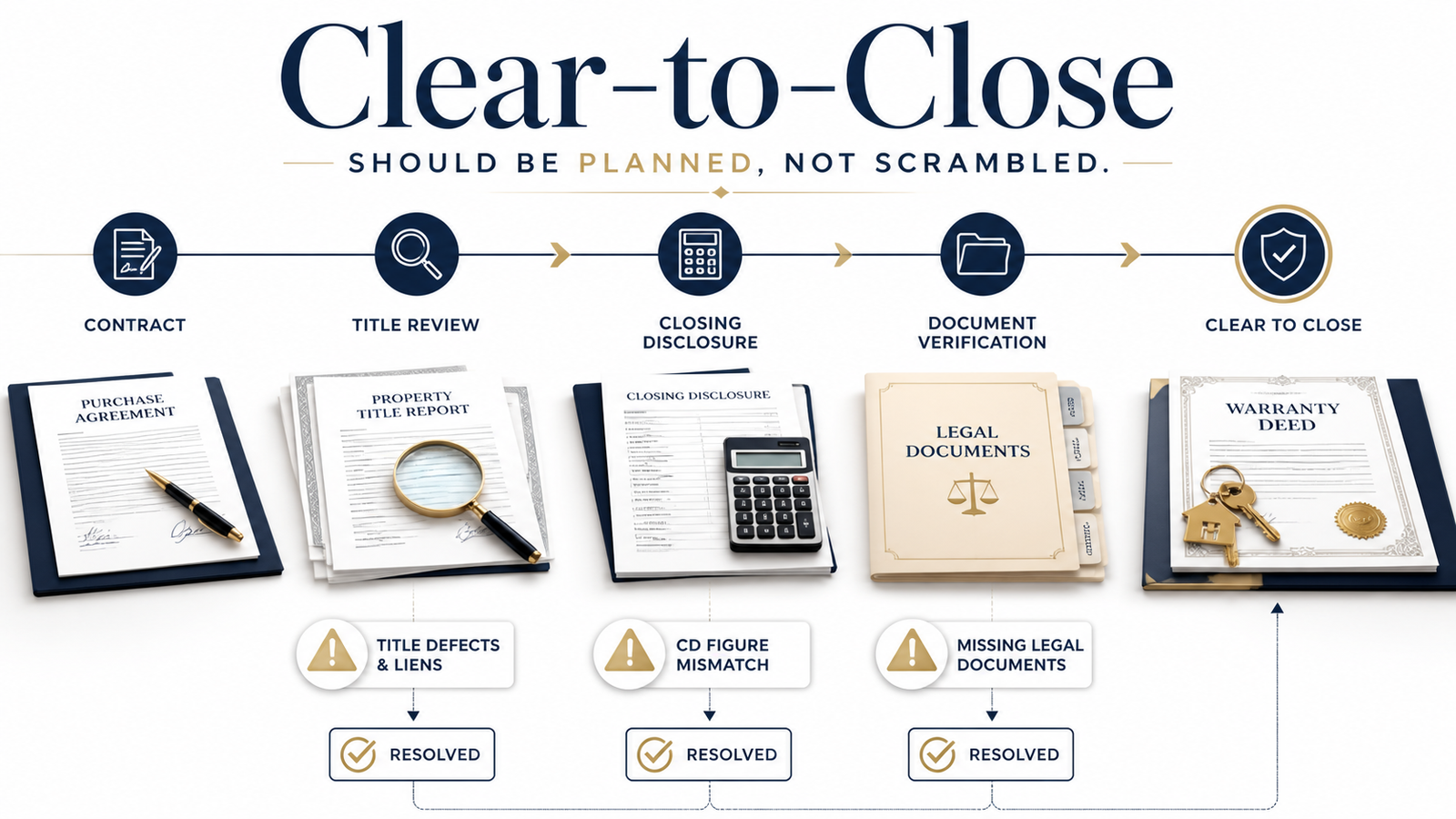
You have accepted an offer, completed the inspections, and are counting down the days until closing. Everything seems to be moving smoothly until the title search uncovers an unexpected issue.
Suddenly, the closing date is pushed back while documents are reviewed, liens are resolved, or ownership questions are answered.
While these situations can be frustrating, they are more common than many buyers and sellers realize. Fortunately, most title issues can be resolved before closing when they are identified early.
At AtoZ Title & Settlement, we understand that every successful real estate transaction begins with a clear title. Our team works diligently behind the scenes to uncover potential problems, resolve them efficiently, and help keep your transaction on track.
Understanding these common title issues can help buyers and sellers avoid unnecessary delays and move toward closing with greater confidence. Here are some of the most common title problems and how they can affect your transaction.
What Is a Title Search?
Before a property changes hands, a title search is conducted to review public records and verify that the seller has the legal right to transfer ownership.
A title search helps identify:
- Outstanding liens
- Ownership history
- Unpaid property taxes
- Court judgments
- Easements
- Recording errors
- Other legal claims affecting the property
The goal is simple: ensure the buyer receives clear, marketable ownership without unexpected legal complications.
1. Outstanding Liens
One of the most common causes of delayed closings is the discovery of unpaid liens.
A lien is a legal claim placed against a property because of an unpaid debt. Even if the current homeowner is unaware of the issue, the lien typically must be resolved before ownership can transfer.
Common examples include:
- Unpaid property taxes
- Mechanic’s liens
- Homeowners Association (HOA) fees
- Court judgments
- Federal or state tax liens
In many cases, these debts are paid from the seller’s proceeds at closing, allowing the transaction to move forward.
2. Errors in Public Records
Even a small clerical mistake can create significant delays.
Public records may contain:
- Misspelled names
- Incorrect legal descriptions
- Recording mistakes
- Missing signatures
- Incorrect parcel information
Although these errors are often unintentional, they must be corrected to ensure the title accurately reflects ownership.
3. Probate and Inheritance Issues
When a property has been inherited, additional legal steps may be required before it can be sold.
Common issues include:
- Probate proceedings that have not been completed
- Multiple heirs with ownership interests
- Missing estate documentation
- Disputes among family members
Until ownership is legally established, the property cannot be transferred to a buyer.
4.Boundary or Survey Disputes
A property survey may reveal issues that were previously unknown.
Common examples include:
- Fences extending beyond property lines
- Shared driveways
- Encroachments from neighboring structures
- Inconsistent lot dimensions
Resolving these matters before closing helps prevent future disputes between neighboring property owners.
5. Easements
An easement gives another person, business, or government agency the legal right to use part of a property for a specific purpose.
Common examples include:
- Utility access
- Shared driveways
- Drainage systems
- Public pathways
Many easements are routine and do not prevent a sale. However, buyers should understand how they may affect the property’s future use.
6. Unreleased Mortgages
Occasionally, a mortgage has been fully paid off but was never officially released in public records.
When this happens:
- The title search still shows an outstanding mortgage.
- Additional documentation is required.
- Closing may be delayed while the lender updates the public record.
Although this issue is usually straightforward to resolve, it can take time depending on the lender and local recording office.
7. Judgments Against the Seller
Legal judgments against a property owner may also affect the title.
Common examples include:
- Unpaid debts
- Civil court judgments
- Tax obligations
- Bankruptcy proceedings
Depending on the circumstances, these claims may need to be satisfied before ownership can transfer.
8. Fraud or Forged Documents
While rare, real estate fraud does occur.
Common examples include:
- Forged signatures
- Fraudulent deeds
- Identity theft
- Unauthorized transfers
A careful title examination helps identify inconsistencies and protects buyers from unexpected ownership claims.
9. Missing or Improperly Recorded Documents
Real estate ownership depends on accurate legal documentation.
Common issues include:
- Previous deeds were never recorded
- Required signatures are missing
- Legal documents were filed incorrectly
- Ownership transfers were incomplete
These issues often require updated documentation before closing can proceed.
10. Unknown Ownership Claims
In some cases, an individual may later claim a legal interest in the property.
Common examples include:
- Previously unknown heirs
- Historical ownership disputes
- Recording errors
- Undiscovered legal claims
Although these situations are uncommon, they demonstrate why a thorough title review is essential before closing.
How AtoZ Title & Settlement Helps
Title issues can feel overwhelming, but they do not have to derail your transaction.
At AtoZ Title & Settlement, our experienced professionals work proactively to identify potential problems early and coordinate solutions before closing day.
Our team:
- Conducts thorough title searches
- Reviews ownership history
- Identifies liens and judgments
- Coordinates with lenders and attorneys when necessary
- Helps resolve title defects
- Prepares your transaction for a smooth settlement
Our goal is to eliminate surprises and provide confidence for buyers, sellers, lenders, and real estate professionals alike.
Why Title Insurance Matters
Even the most thorough title search cannot uncover every possible issue.
Title insurance provides valuable protection against certain hidden title defects that may surface after closing, including:
- Unknown heirs
- Forged documents
- Recording errors
- Undisclosed liens
- Fraudulent ownership claims
Owner’s title insurance helps protect your investment and provides peace of mind long after the transaction is complete.
Tips for Avoiding Closing Delays
Whether you are buying or selling, these simple steps can help keep your transaction on schedule:
- Begin the title process as early as possible.
- Address known liens before listing your property.
- Keep ownership documents organized.
- Respond promptly to requests for information.
- Work with an experienced title and settlement company.
Being proactive often makes the difference between a smooth closing and an unexpected delay.
Final Thoughts
Most title issues are not deal breakers. They simply require the right expertise, careful attention to detail, and timely resolution.
At AtoZ Title & Settlement, we are committed to helping buyers, sellers, lenders, and real estate professionals navigate every stage of the closing process with confidence. From thorough title searches to seamless settlements, our experienced team works to protect your investment and keep your transaction moving forward.
If you are preparing to buy, sell, or refinance a property, AtoZ Title & Settlement is here to help. Contact our team at (888) 615-2869 or visit www.atoztitle.com to learn how we can help keep your closing on track from start to finish.