By AtoZ Title & Settlement Team
When reviewing your closing costs, you might wonder: “If the title company already checked the property’s history, why do I need title insurance too?”
It is a reasonable question. A title search and title insurance can sound like two charges for the same service. Understanding what each provides can help you make an informed decision about protecting your home.
A title search identifies ownership issues before closing. Title insurance provides protection against covered title problems that surface afterward. They serve different purposes, and a completed search does not replace insurance coverage.
Here is how they work together and what to ask before settlement.
1. A Title Search Examines the Property’s Ownership History
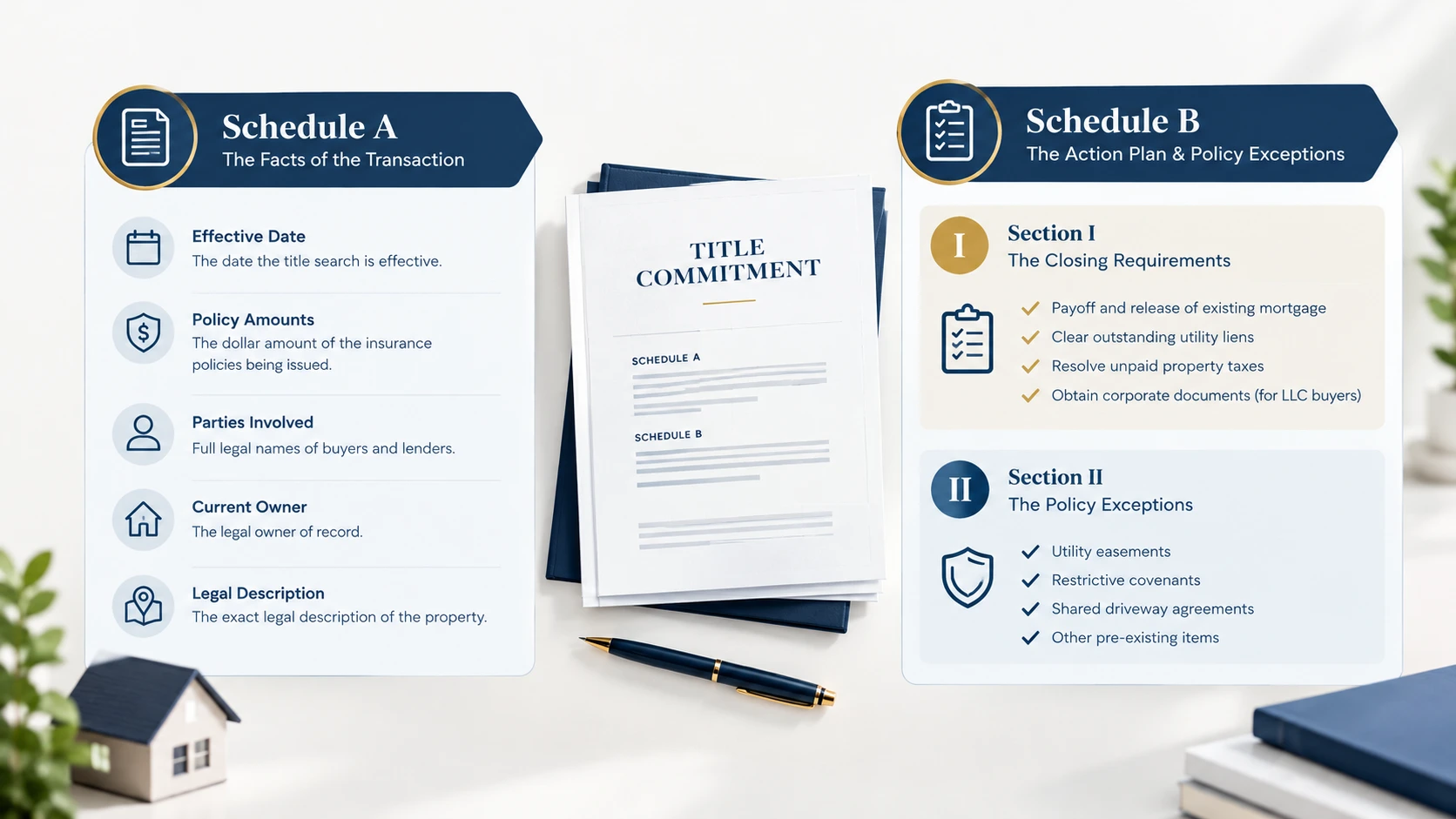
Before settlement, the title team reviews public records to investigate ownership and identify matters affecting the property. These include outstanding mortgages, unpaid property taxes, judgments, liens, and recorded easements.
The findings help determine what must happen before closing. An existing mortgage needs to be paid off. An old lien may need a release. An easement needs to be disclosed so you understand the rights affecting the property.
This work helps address problems before ownership changes hands. However, public records do not reveal every underlying issue. A recorded document can appear valid even when there is a problem with how it was created or signed.
What this means for you: The search helps your title team find and address problems before you buy. Insurance adds protection against covered problems discovered later.
2. Title Insurance Addresses Risks a Search Cannot Eliminate
Imagine purchasing a home after the title search shows an apparently valid chain of ownership. Months later, someone challenges an earlier deed, claiming a signature was forged.
The deed was in the public record during the search. The forgery was not apparent from examining it.
If the resulting claim is covered by your owner’s policy, the insurer can provide a legal defense, work to resolve the defect, or pay a covered loss, depending on the policy’s terms and limits. That matters, because even a claim that turns out to be groundless can take time and money to defend.
What this means for you: A careful search reduces the risk. Your owner’s policy helps protect you financially if a covered title problem appears after closing.
3. Your Lender’s Policy Does Not Protect Your Equity
If you are financing your purchase, you will likely see a lender’s title insurance charge on your closing documents. It is easy to assume that paying for this policy protects your investment too.
A lender’s policy protects the mortgage lender’s interest in the property. Most lenders require it as a condition of financing. It does not protect your equity.
An owner’s title insurance policy provides separate coverage for your ownership interest against covered title risks.
Owner’s coverage is generally optional. Before closing, confirm which policies are included in your costs so you can make that choice with a clear understanding of who each policy protects.
What this means for you: The lender’s policy protects the lender’s interest. An owner’s policy provides separate protection for your ownership interest in the home.
4. Standard and Enhanced Owner’s Policies Offer Different Protection
Once you understand the purpose of owner’s coverage, the next step is to ask which options are available.
A standard owner’s policy covers specified title risks, including certain defects connected to the property’s ownership history. An enhanced homeowner’s policy offers broader protection for eligible buyers and properties.
Depending on the policy, expanded coverage can include certain post-policy forgeries and specified losses involving existing building permit or subdivision violations. Some protections have deductibles, separate dollar limits, or other requirements. Enhanced coverage does not cover every construction problem or future act of fraud.
Owner’s coverage generally involves a one-time premium at closing and continues while you own the property, subject to the policy’s terms. Review the exceptions and exclusions as well. These identify matters outside your coverage, such as a particular recorded easement.
What this means for you: Ask your settlement team to compare the policy options, so you know what each one covers and where its limits are.
5. Understand the Charges and Who Pays Before Closing
You should feel comfortable asking questions about any charge on your closing documents.
Ask your settlement team to explain the title search and examination fees, lender’s premium, and owner’s policy options. You can also ask about available discounts. Purchasing owner’s and lender’s policies together can reduce the combined premium compared with purchasing them separately.
Who pays can vary by local custom and the purchase contract, including from county to county in Florida, so confirm the arrangement for your transaction.
What this means for you: No charge should be a surprise. Ask before closing day.
Feel Confident About the Ownership You Are Receiving
Buying a home comes with unfamiliar documents and important decisions. You deserve clear explanations, time to ask questions, and a team that treats your concerns with care.
At AtoZ Title & Settlement, our dedicated processors and in-house attorneys bring personal attention and legal experience to the closing process. We help you understand title requirements, explore policy options, and address questions before settlement.
Whether your concern involves an old lien, a policy exception, or an unfamiliar closing charge, our team takes the time to explain the details so you can approach closing day at ease.
Ready to move forward with confidence? We are here to help. Contact AtoZ Title & Settlement at (888) 615-2869 or visit atoztitle.com. We serve homebuyers and real estate professionals across Virginia, Maryland, Washington DC, and Florida, with attentive support from contract to closing.