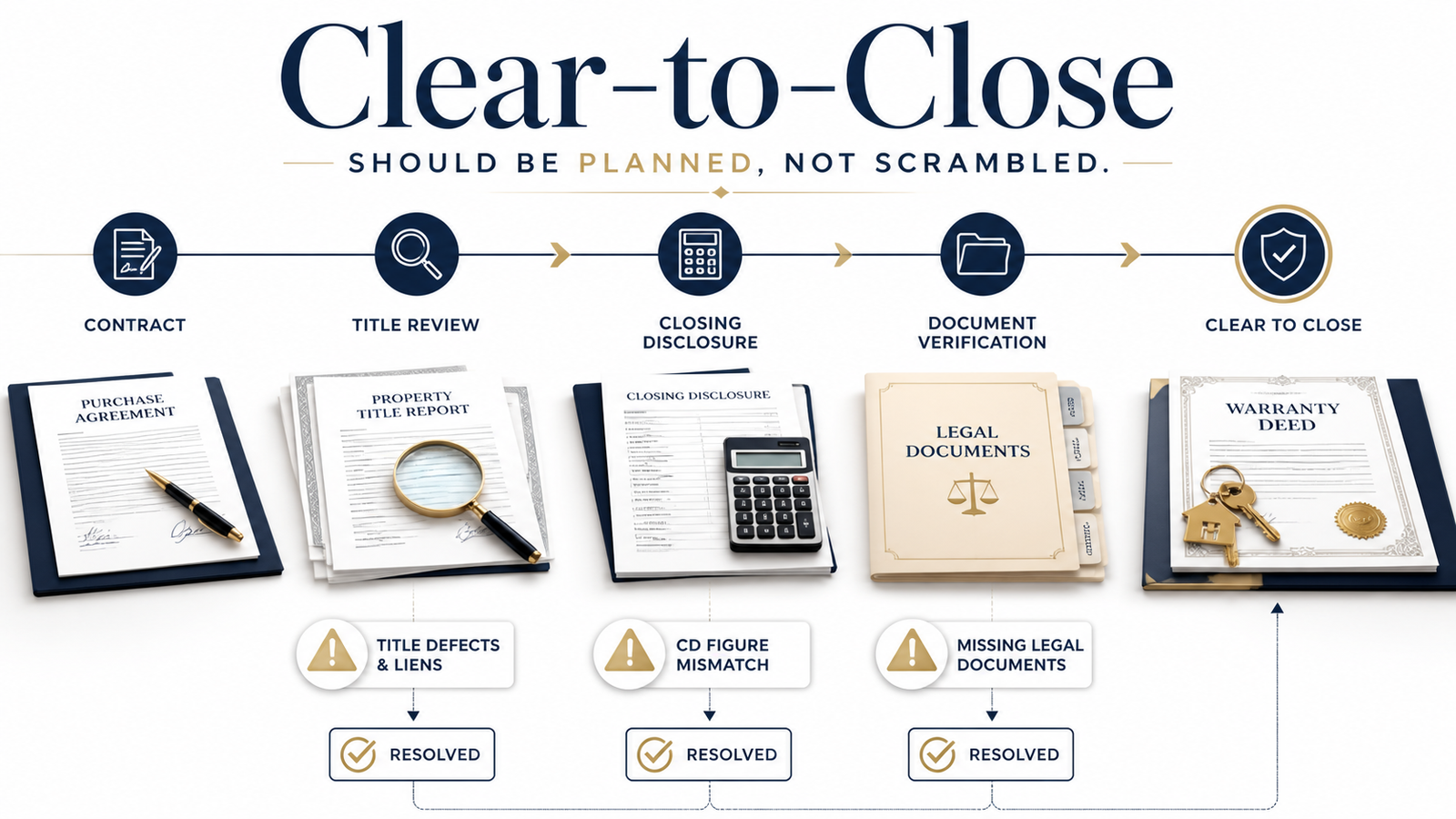

In the final stretch of a real estate transaction, few tasks are as critical as balancing the Closing Disclosure, also known as the CD. Mortgage lenders and title settlement teams must work together to ensure that every fee, credit, and proration matches perfectly.
When the figures align seamlessly, the transaction moves smoothly toward the clear-to-close milestone. However, when discrepancies arise, the closing timeline faces an immediate threat. Under federal guidelines, any significant change to the financial terms can trigger a revised disclosure, resetting the mandatory three-day waiting period and delaying settlement day.
Balancing the CD does not have to feel like a high-stakes guessing game. By establishing clear workflows and open communication lines early, loan officers and title teams can eliminate friction and protect their clients’ timelines. Here are the best practices for mastering the closing disclosure balancing process.
- Initiate Early Data Integration and Fee Collaboration
Waiting until the final week of a contract to exchange closing figures is a primary cause of transaction delays. Discrepancies frequently occur because lenders and title companies use different software systems, leading to minor rounding variances or outdated fee estimates.
Best Practice:
Title teams and loan officers should establish a collaborative digital connection as soon as the file is opened. At AtoZ Title & Settlement, we utilize integrated platforms, such as creating the order directly in Qualia, to share real-time closing data with lending partners. Exchanging preliminary fees at intake allows both parties to identify and resolve discrepancies in recording fees, transfer taxes, or title premiums weeks before the final CD is issued.
- Streamline the Verification of Prorations and Credits
Homeowner association dues, local property tax assessments, and specific seller concessions require careful mathematical calculations. If the title processor and the mortgage underwriter use different proration dates or utility data, the final cash-to-close figures will not match, stalling the final approval.
Best Practice:
Establish a single point of reference for all property assessments early in the transaction. Loan processors should provide the title team with the exact closing date used in their compliance system, while the title team should deliver verified tax maps and association invoices immediately upon receipt. Clear documentation prevents conflicting calculations and ensures that both systems balance on the first attempt.
- Maintain Direct Lines of Communication Between Processors
Miscommunications between separate processing departments can turn a minor fee adjustment into a major delay. When a loan officer or an escrow agent makes a unilateral change to a fee without notifying the other party, it creates a visual mismatch that halts the automated compliance systems used by major banks.
Best Practice:
Clear communication and direct accountability prevent administrative errors from falling through the cracks. Both organizations should assign a dedicated point of contact to manage the file from contract to closing. Direct communication between the title processor and the mortgage processor ensures that any mid-transaction changes, such as invoice updates or repair credits, are updated in both systems simultaneously.
The Power of a Unified Closing Workflow
A successful settlement is built on early preparation and professional collaboration. When loan officers, mortgage processors, and title teams operate as a unified unit, matching the closing disclosure becomes a routine administrative step rather than a last-minute scramble. Proactive coordination protects your professional reputation, preserves your client’s interest rate lock, and delivers a stress-free experience at the closing table.
AtoZ Title & Settlement Team
Ready to partner with a team that prevents delays before they happen? Reach out to AtoZ Title & Settlement at (888) 615-2869 or visit atoztitle.com. We serve real estate professionals across Virginia, Maryland, Washington DC, and Florida, and we are committed to keeping your transactions on track and your clients confident from contract to closing.